Showing posts with label Previews. Show all posts

19/02/24

Demo Diving : Mario Vs. Donkey Kong (2024)

    Most of my childhood game-playing was spent in the back of a car, usually after school. Whether it was a shop’s car park, an hour’s drive to relatives or a long trip to McDonald’s, I would fill the time blocking out the radio and playing on my DS Lite, later my 3DS (later still my 2DS after the 3DS met concrete too many times) and eventually my Switch.

Why do I say all of this? Because the new remake of Mario Vs. Donkey Kong is a dip-into-while-in-the-back-of-the-car-on-a-journey type of game.

Originally released on the Game Boy Advance as a successor to the original Game Boy’s Donkey Kong (1994), Mario Vs. Donkey Kong has always been good handheld fodder. Apart from Mario & Donkey Kong : Tipping Stars releasing on Wii U alongside the 3DS, the series has always been at home on the smaller screen. Something that’s perfect to play a level or two when you’re travelling over a few months. If you hit a wall, just close the game and look out the car window for a bit. Maybe switch the radio back on. By contrast playing the demo tethered to a TV under my own roof and giving it my full attention felt wrong. The music is pretty jazzy at least.

Apart from fully animating the original cutscenes, adding a Toad for co-op, and a Casual mode that removes time limits on stages, the demo doesn't show any differences from the original that aren't graphical enhancements. It's strange to play a game with such a NSMB house style Mario who controls like he's right out of the GBA. I had a similar adjustment period with the Link's Awakening remake, but that at least was classic Link. This is not classic Mario, but classic DK Mario : a very different beast that's slower and prone to handstands, now with sound bites from New Donk City.

Every level is timed and parcelled out in sets of six regular levels with two special levels on the side. The special level included in the demo tasks you with guiding the precious Mini Mario toys back to their toy box. The other special level seems to be a battle with Donkey Kong to get more Mini Marios back. I got through the four levels in the demo in about twenty minutes, taking care to not leave a trail of dead Marios in my wake.

According to the game’s website, there are new levels in the remake and later stages are sure to challenge more than the demo’s opening levels. Much like the original I feel Mario Vs. Donkey Kong will be a welcome companion on long journeys but doesn’t feel at home on the TV.

Mario Vs. Donkey Kong is available now on the Nintendo Switch for £39.99/$49.99. It is a puzzle-platformer developed by Nintendo Software Technology and published by Nintendo.

Thanks for reading Demo Diving - a series about the slices of games you can try before you buy. With high prices and long playtimes, starting a new game can be a big commitment. Thankfully many publishers choose to release a small part of their games for free. Let’s dive in the deep end and see what’s good!

25/09/21

Hands On with... Schrodinger's Catgirl

     Hands On with... Schrodinger's Catgirl

    Homes contain so much more than you'd think. Memories, it's been said, clutter those four walls as much as their occupants' favourite tat. Cat hair, too. That stuff gets everywhere.
    Schrodinger's Catgirl is an upcoming visual novel that pits Leon and Lemi (members of the small investigation team L.I.T, along with resident psychic Myrtha) against the decaying Hayes mansion a few hours after a girl was mauled there.
 

    Strange lights and sounds have been reported coming from the supposedly-abandoned mansion before, but what kind of squatter leaves enormous claw marks in stone pillars and what does this have to do with the scientists that used to work here?
    Restricted to the ground floor for the demo, players will encounter more questions than answers, but Writer and Lead Developer Els White's witty dialogue never fails to keep you engaged in L.I.T's misadventures.
 

    Lemi is reckless and enthusiastic, while Leon is more cautious and susceptible to premonitions of doom. On my second playthrough, I fiddled with the kitchen sink and found Myrtha brooding in a pocket dimenion there. Not only is she great company, but she also allows players to erase specific plot beats they've encountered to alter the course of the story.

    Little could be altered in the demo, but Leon's premonitions didn't get quite as bad the second time around thanks to Myrtha's meddling, at least.
    Some other things, like the collapse of the main hall's chandelier, also varied between playthroughs, hinting at the "infinite possibilities" the developers promise your investigation can take on, depending on the evidence and conclusions you draw.


    Gameplay in Schrodinger's Catgirl will be familiar to fans of any classic point-and-click game -- peep in every nook and cranny for clues as you move between connected environments -- but it also offers something unique.
    As you inspect the mansion, you start to gather clues about the case that fill an inventory. Drag one clue to another to draw conclusions between them (if they're related). Seemingly made with the mouse in mind, it was tricky navigating the clues using the trackpad, but hopefully Spider Lily Studios will be able to tweak this before release.
 

    Another mechanic sure to be crucial in the final game is time travel. Just snap a picture in the right rooms (just the study for the demo) and be transported into a version of it from the past. Unfortunately, this doesn't seem to allow for you to open doors in the past so you can slip through in the present as much as gather some evidence before it was ravaged by time.
    Homes contain so much more than you'd think. People, their possessions and, their memories, granted, but also their secrets. See what L.I.T can uncover in the Hayes mansion when Schrodinger Catgirl launches.
 

Stats

  • Playtime - 20 minutes (DEMO)
  • Genre - Visual novel; Adventure game
  • Developer - Spider Lily Studios
  • Publisher - Spider Lily Studios
  • Platforms - Steam
  • Release - 2023 (Tentative)
  • In 5 words - Is she alive, or dead?
Set to feature music from harmonicblend and art from Shan Horan, Sasha Ines and Maxi Molina, Schrodinger's Catgirl raised £15,301 on Kickstarter in September and will release in 2023.

18/09/21

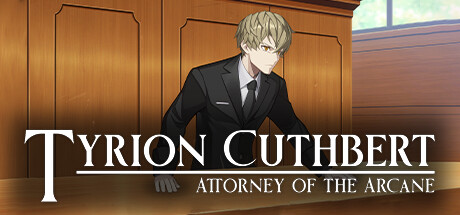
Hands On with... Tyrion Cuthbert : Attorney of the Arcane

     https://cdn.cloudflare.steamstatic.com/steam/apps/1590230/header.jpg?t=1624565897
 
    After the previously Japan-only The Great Ace Attorney Chronicles finally released worldwide this past summer, more people than ever have been able to sample the series' unique brand of judicial mayhem and what better time to share your own AA-inspired game with the world?
    Unfortunately, the derivative defending of Tyrion Cuthbert : Attorney of the Arcane withers in the shadow of its inspiration.
    From the basic structure of cases (court case - investigation - more court case) down to lifting the very same character poses and breakdowns when battling in court, there was a strong sense of deja vu throughout my time with TC:AA's demo.
    Now, although it can be creatively bankrupt to simply file the serial numbers off of someone else's creation, there have been some great games in recent years to take strong inspiration from classic games (take upcoming Zelda and Souls-like Tunic, for example). Judging from the admittedly WIP demo, TC:AA is not set to be one of them.
 
 
    Comprising the first case, the plot is farily by the numbers : it's up to fresh-faced lawyer Tyrion Cuthbert to defend a poor girl accused of killing her father with magic for his very first case.
    In TC:AA's world, only the nobility can perform magic and typically only a few spells at that. The rules of magic will be familiar to players of D&D, with a detailed description of how the spell is performed and its school of magic, and are implemented as evidence in cases much like in Professor Layton vs Phoenix Wright.
    Why rookie lawyers always get assigned life-or-death cases, I don't know, but the prosecutor for this case is also green. Aria Steelwind is your musically-named rival for at least the first case and despite being roughly the same age, she looks down on Tyrion as an "amateur". It's these kinds of odd character beats and dialogue choices that plague TC:AA's demo.
 
    At one point, your mentor (who's saddled with Edgeworth-esque allegations of falsifying evidence) refuses to let you look at the accused's spellbook to use as evidence for some kind of teaching moment - in the middle of a murder trial!
    Flashbacks are used between scenes to flesh out backstory to the case, but end up being recounted to Tyrion through exposition just 10 minutes later, grinding the pace to a halt.
    These little issues, along with the inconsistent artstyle that makes every character look like they're from a different game and just not at home with the backgrounds, add up over the course of the demo and made my time with TC:AA more frustrating than anything.
 
    Outside of court, you get the chance to harass talk with witnesses at the crime scene, as well as presenting evidence with the hope of loosening their lips, though without the hilarious "bad reactions" if you show them something completely irrelevant like in AA.
    Similar to the Psyche-Locks of AA: Justice for All, the persuasion system is perhaps TC:AA's most interesting wrinkle in the formula. About halfway through the investigation, Tyrion has to persuade the detective working on the case who hates his mentor to help out. The tutorial promises branching pathways in the full game based on how well you do with this, but funneled me to a "good" outcome despite how bad a job I did.


    Beyond this - and a shallow deduction mechanic that just involves filling in the blanks through trial and error - it's a fairly beat-for-beat retread of Ace Attorney's mechanics, but less inspiring in execution.

Stats

Playtime    - 2 hours (DEMO) 

Genre        - Visual novel; Adventure game; Fantasy

Developer  - Diamondhenge Entertainment

Publisher   - Diamondhenge Entertainment

Platforms   - Steam; Android

Release      - 30/12/2022 (Tentative)

In 5 words  - It's a... kind of magic.


    Set to feature music from YouTube stars Insaneintherain and Shady Cicada, TC:AA's IndiGoGo campaign fell 33% short of its £21,833 goal and has an uncertain future. I believe with a good editor, the game could be a good Ace Attorney clone, but hope that this setback leads to developer Stephen Charles to give Tyrion a bit of his own identity.

11/09/21

Hands On with...Tunic

Official key art by aurahack.
 
    A green-garbed hero wakes up on an island. Their mission - retrieve a sword & shield and get to work vanquishing evil. Sounds familiar? Well this hero’s the cutest I’ve ever seen. And a fox.
 
 (Disclaimer: The author of this piece is acquaintances with one of the developers of TUNIC and received a few hints from them on where to find things over the course of the demo.)
 
    Tunic is an adorable isometric action-adventure game that wears its inspiration from the Legend of Zelda series on its sleeve. From the clay-like character models to rows of rubbery grass, you might think this is coming on the tails of 2019’s Link’s Awakening Remake, but Tunic was unveiled by publisher Finji back in 2017.
 
    Despite some similar aesthetics, Tunic is very much it’s own beast, so I’ll try to keep comparisons light. Now, an unexpected source of inspiration for the game (that admittedly didn’t click until I saw so many people posting about it) is Dark Souls.
 
Welcome to pain.
 
    You’re probably familiar with the ‘Souls-like’ formula : kill-kill-kill as you explore ruins or a town (or even ruins of a town), die over and over to scary ghouls as you slowly learn their strategies and weaknesses, and uncover a shortcut or two as you go. All of this applies just as easily to my time with Tunic and the grimness of repeated deaths is an interesting contrast to the game’s cute artstyle.
 
    And what an artstyle it is! I know I’ve already made my feelings clear already, but the banquet of cute details - like how the (canonically nameless) Tunic Fox takes the time to give every enemy they walk past a good look - made my six hours with the demo a delight.
 
    Sunlight filters through the leaves as the waves lap the shore and armoured feet pound the cobblestone, all with the same level of care put into them. Everything in the demo was a treat to the eyes and ears thanks to the art of Eric Billingsley and developer Andrew Shouldice, not to mention Power Up Audio’s excellent work on the sound effects.


    The demo -- which presents itself as a “remix” of the final game on its faux manual page -- is crammed with secrets and gives a good picture of what the core gameplay loop is going to be : explore the island, slay/run away from beasties, keep an eye on your stamina meter so you can keep dodging and blocking attacks, collect stronger weapons to defeat more powerful enemies, pray at shrines to respawn at them when you inevitably get blown up by a Slorm, and - whatever you do - do NOT try to fight the giant skeleton.
 
    Dubbed “Mr Bones” by those lucky enough to play Tunic’s demo during its limited-time availability at Gamescom’s Indie Arena Booth two weeks ago, the giant skeleton lingers off the beaten track and hints at the difficulty curve to come in the final game. Only after I scooped up every health potion around the island (love the fox’s swig animation, by the way) and bombarded Bones with a barrage of bombs was I able to defeat them.
 
Dodging and blocking are the only ways to avoid those turrets, but your stamina runs dry so fast.

    It’s likely Tunic will wall off things for later in the story this way, which feels faaaaaar more organic than an invisible wall or the “I don’t want to do that” monologue of other games. In fact, there won’t be any monologues in Tunic at all if the demo’s anything to go off of. No text either.
 
    Every sign you come across while exploring the island is plastered in a series of indecipherable glyphs and the occasional picture - with the exception of the SEALED FOREVER message when you try to open an enormous gold door to the north of the starting area that I think was only put there so demo players wouldn’t waste too much time trying to jam the collectible gold medals inside of it’s medal-shaped crevices.
 
Yes, officer - this door right here.

    The aforementioned manual (which you appear to be able to collect pages from) also has a smattering of English, but largely just so players know what the button’s do.
 
    Quite a departure from Finji’s last game - the text-heavy Chicory - but Tunic should have no trouble reaching an international audience from launch as a result.
 
    Coming at some point in the next century (my money’s on a surprise release early next year - based on nothing at all) to Xbox and STEAM as what I believe to be a timed exclusive, Tunic is the action adventure game that’s far more than a Zelda-like.
 
    Will you be buying this game day one, and why is the answer ‘yes’? Do tell in the comments.

10/09/21

Hands On with... KeyWe


    Wanted : Two keen workers ready to start a lucrative career in the post office. No experience required. Must bring own beak.

    KeyWe is a co-op platformer where you try to meet objectives as quickly as possible. You play as Jeff and Debra, two Kiwi birds looking for work in a post office, either by switching between the two, playing both at once or playing with a friend.

    The first control scheme is a lot like playing Overcooked on your own : fast-paced and probably more relaxed, but far less fun and efficient compared to playing with someone else. When you rope another player in, either by sharing the keyboard or connecting via online multiplayer, the fun behind KeyWe's sorting shenanigans seeps out.

    Each level -- or indeed assignment -- has the birds put to work in a unique aspect of the post office. Included in the demo are two ordinary assignments, typing out messages and sorting out packages, but there was also one Overtime level to squabble in.

    Regular levels take no more than five minutes, and give Jeff & Debra three objectives to meet as soon as they can, be it stomping keys to send vital messages like "Wear your coat Todd", or shoving packages down the conveyor belt to speed up delivery. Saddled with a timer by default, this can be switched off in settings if you want to lark (er - Kiwi) about in levels without a klaxon blaring at you once a minute.

    Overtime tasks players with earning as many points as possible within a set time, unlike the (optional) running clock of regular levels. This one had the Kiwis running back and forth with apple spices and water for a pen of cassowaries, as well as breaking up the occasional fight with a good squawk.

    Beating regular levels within a certain time and getting enough points in an Overtime level nets you a Bronze, Silver or Gold rank, along with some stamps. In my time with the demo, getting Gold was almost impossible, even with a well-coordinated team, so it’s likely the final game will have some rather testing tasks.

    More currency than Penny Black, the stamps earned can be exchanged for cosmetic improvements - like goggles, headphones and red feathers - to better tell the birds apart. For the record, Jeff is the one on the left. I think.

    If you're already well acquainted with chaotic multiplayer team games like the aforementioned Overcooked, you'll likely enjoy this one too, but it's hard to say yet whether there's anything truly unique about KeyWe beyond its cute cast.

    Stonewheat & Sons' debut game releases alongside this article on Steam, XBox, Switch and PlayStation from SoldOut Digital, with some extra cosmetics thrown in free of charge if you got it within the first week.

Hands On with... The Outbound Ghost

    “Back after so many years?” booms a mysterious voice as we’re transported to an otherworldly realm, filled with glowing orbs that speed towards the titular spook of The Outbound Ghost, “I wonder how you’ve changed.”. Whoever they are, they could just as easily be talking about the Paper Mario series that inspired the game.

    Originally an RPG spinoff of the core Mario games, the Paper Mario games soon became a strong series in their own right, characterised by witty dialogue and 2D sprites in a papery 3D world. As the series went on, the games began to move away from their stat-based RPG roots and closer and closer to puzzle/action/exploration hybrids.

    This, plus the introduction of new and often intrusive gimmicks in each subsequent entry from Super Paper Mario’s flip mechanic on-wards, alienated a lot of the series’ original fans.

    Fans of the first two (Paper Mario on the N64 and The Thousand Year Door on the Gamecube), have since taken matters in their own hands, most notably 2020’s Bug Fables, but with The Outbound Ghost’s Kickstarter coming to an end tomorrow, I thought it was time I took at this promising successor to TTYD’s throne.

    The demo (Currently available on Steam!) begins with a car careening down a quiet country road at night. Suddenly, the screen cuts to black and we hear the shriek of tires before a ghost steps out of the flaming wreck.

    A cute, blue-glowing 2D sprite that wouldn’t look out of place in a Paper Mario Ghost Mansion, the nameless ghost wears a simple, often neutral, expression and a little tuft of hair. This baby-faced apparition reminds me of Casper the Friendly Ghost just a tad, and the thick white borders around this and every other character sprite calls to mind the borders of stickers, which fits the paper theme well.

    Although the first impression of it is consumed by fire, I have to say now that the world in this game is gorgeous. Each individual blade of grass wafts in the breeze and makes the world feel like our own, rather than a series of dioramas. Whether that’s going to be a bridge too far for fans of Paper Mario’s handcrafted world, I’m not sure, but it certainly means this would not run on the N64, and I have to confess that my laptop struggled at times, which makes me question how well it’ll run on the Switch.

    That’s a shame, as The Outbound Ghost’s controls feel like they’re better suited for a console than a PC. Even though it uses the classic WASD/arrow keys and you have some kind of crystal that allows you to dash with the space bar, one glaring example of this was when equipping a shovel. Each of the four slots were at 45-degree angles, which was not the most intuitive thing to navigate with four directions, but would be a breeze with an analogue stick.

    Also easier with more than four directions to move in are what I call the “faint and have an out-of-(non)body experience in a weird purple dimension where orbs and a mysterious voice just won’t leave you alone” sections. Two of these appear in the demo, and both of them award you with a Brave or Timid soul (represented by a yellow or blue puddle in your inventory) based on how many orbs you let hit you. This feels rather counterintuitive considering the bullet hell sections, which involve dodging projectiles heading your way as usual.

    Fans of Danganronpa and Undertale will recognise the bullet hell mechanics well - you control an icon representing you (a mini silhouette of our spirit here) and do your best to dodge a series of obstacles coming your way. These take the place of turn-based combat in The Outbound Ghost and come between dialogue options that slowly fill the meter at the top of the screen.

    The only example of this in the demo is a scene involving helping an Outbound resident through the stages of grief over her death. On each turn, you have the choice of three verbs along the lines of Insult, Console, and Explain to best respond to their current stage.

    Common sense usually serves you well here - don’t insult an angry person to reason with them, for example - but the choices being coloured Red, Purple and Green does muddy the waters a little. None of the dialogue exchanged in this segment is actually seen, which does detach you from the impact of your choice, even if there’s only one right answer to progress.

    I’ve been keeping things light on plot so far, but I’ll divulge a bit now. After you leave the aforementioned car wreck and head into the town of Outbound, you encounter the local (deceased) teen detective, Michael McFly, who suspects you of murdering the entire town some time ago.

    You play as the accused ghost, who conveniently has forgotten everything about themself except their name, which is where you come in. As far as immersion goes, a lot of RPGs go the “amnesiac protagonist that you can name” route, but most offer a canon default name (think Chrono in Chrono Trigger) or easter eggs for certain names, neither of which I could find here. However, the ghost is referred to exclusively with they/them pronouns, so absolutely anyone can put themselves in the spectre’s proverbial shoes.

    Outside of regular world traversal and picking up everything not nailed down, there are a couple of other mechanics revealed in the demo that I haven’t mentioned yet.

    A couple of times, you’re faced with a locked door or gate and have to collect enough lockpicks to complete a slide puzzle, which involves getting cylinders of metal out of the way of a key so you can push it to the lock. Later puzzles involved tilting a 3D box (officially dubbed the girabox) to fit a square peg into its respective hole, so I imagine the full game will push puzzles even further.


    Beyond that, star-shaped pads appear on the ground towards the end of the demo, allowing you to traverse the way back to the town with a spot of platforming. A Cards section can be found on the game’s menu, which will be part of the Spades n Souls minigame in the full game.

    Over the course of 30 minutes, the demo introduced me to the majority of characters and possibly locations, but I have the feeling that a lot of the game will be spent fleshing out each of their backstories.

    Utterly charming and a sight to behold, The Outbound Ghost is certain to make waves next year, but I do wonder which platform it’ll be at home on. Initially aiming for the Switch and PC, the lower technical capacity of the former and the unsuited control scheme of the latter do suggest that its stretch goals of PS and XBox will be the superior versions. But then, it is being ported to phones too, so hopefully I’ll be proven wrong when it releases.

    At the time of publication, the Kickstarter had a hair under a day of funding left to go. Do you think this game will be the answer to the question “Where’s my Paper Mario?” or will the lack of traditional RPG elements alienate fans of the series?

    (Disclaimer : I did end up backing this game for the Switch)

Hands On with... Oddventure

Undertale was one of the game industry’s biggest success stories of the last decade. “The Game Where You Don’t Have To Kill Anyone” captivated a generation of players as it twisted RPG conventions to their breaking point.

And now, following on from that game’s core Murder/Mercy mechanic, comes Oddventure, a game quite clearly cast in the mould of Undertale and Earthbound alike. With a demo currently available on Steam and on developer Infamous Rabbit’s itch.io page, I decided to check it out.

The story begins with Charlie (or Charlotte) chasing after her little brother Bonzo into the woods and ending up in the Kingdom of Luxia - a fantasy world cut from the cloth of the Grimm brothers, albeit with a few more men dressed like Dodos and a few more dwarfs that flash you.

While chasing after Mr Rabbit and Mr Dodo as they run deeper and deeper into the forest with Bonzo for their tea party, Charlie comes across a frog named Slippy who teaches you the basics of combat.

Conventional at first, with the compulsory death of an enemy, combat soon deepens to include Moods. Ranging from utterly downbeat to ecstatic, these fluctuate throughout fights for each side.

Complimenting your enemies or telling them a joke can cheer them up, while attacking or insulting them wears them down to a depressed state.

When they’re at their lowest, you get the choice to kill or spare them, so no accidental killings in this game. Too late for Toriel, though.

Soon enough, you have a party of three at your disposal (Messrs. Dodo and Rabbit count as one fighter) with a bunch of unique attacks that can boost or drop the Mood of your enemies and allies that even extends to the effect of items.


When characters get annoyed, they attack of their own accord. When they become depressed, they don’t do anything at all on their turn. If a party member dies in combat, the whole party’s mood drops in a way that’s difficult to come back from.

Although your Mood carries over across battles, there was not a way to use items to heal or improve your mood when in the over-world, which led to a lot of deaths over the course of the hour-long demo. Hopefully this won’t be the case in the final version, as it would really be detrimental to players otherwise.

Outside of combat, the player controls Charlie and her entourage as they traipse around the map, solving some light puzzles and fleeing from enemies shrouded in darkness as opposed to random encounters. Regretfully, the game doesn’t tell you how to make Charlie run as a part of the tutorial (yes, I know it was on the control screen, but no-one absorbs all of that), so she trudged as if through treacle for a lot of the demo.

The story is quite straightforward - Charlie chases her brother, catches up with him and sets off on a grand quest to get back home, but there are a couple of scenes that show her grappling with self-doubt and angst in a tumultuous segment set in a metaphorical black void filled with the personifications of her worst fears. Curious to see where that goes in the full game.


It will be interesting to see where most of the ideas present and choices offered in the demo go, as Slippy calling Charlie a “Moodmancer” feels too oblique to not be developed on when Oddventure releases.

Comparisons to Undertale can be found both in and out of Oddventure, but I believe the game has enough of its own mechanics and style to stand alone. The Kickstarter this demo ends with a promotion for ended in June with €42,697 from backers to bring it to Steam and the Nintendo Switch in September 2022, so we’ll all be able to find out what kind of impact Oddventure has soon enough.

Hands On with... Pokemon Unite

 For the first time in the Pokemon franchises’ long merchandising history, Nintendo and Tencent have released a MOBA starring all your favourite pocket monsters for the Switch. And it’s free!


What is a MOBA, you ask? The Multiplayer Online Battle Arena genre, where teams of players fight against each other over the internet, has taken off in recent years, with some of the most notable ones being Riot Games’ League of Legends and DOTA 2.

Last year, Nintendo announced that they would be working with Tencent (the Chinese company that owns Riot Games) to release Pokemon Unite - a free-to-start 5v5 experience for the Switch and mobile (in September). Released this past week, I wasted no time in getting to grips with it.

Once you get through the now customary Terms & Conditions agreements, you’re greeted with a little skippable cutscene showing 10 of the game’s current 25 Pokemon taking part in a match. It shows off the basics of the game - scoring points in enemy goals - quite well, so I would suggest sitting through it if you’re as new to MOBAs as I am.

After this was the character customisation, where you mold your Trainer in your own image. It’s no Miitopia, with only six options in each category, but I was still able to craft an avatar that I only saw mirrored once in 20 matches. “Thankfully”, you do have the chance to change them up a little more later on, with costumes and eye colours and more being available to you once you’ve earnt some Aeos Coins and Tickets - Pokemon Unite’s main currencies.

With that out of the way, you’re introduced to Professor Phorus, the head researcher in the Aeos Region, and thrown into the two-part opening tutorial as a Charmander.

In matches, you move your Pokemon around the arena map, fighting Wild Pokemon and the opposing team as you go to collect points to score and EXP to level your Pokemon up. When your Pokemon reaches a certain level, they evolve (with the exception of the sole Legendary Zeraora) and develop new abilities to replace their old ones, much like in the main games.

Combat largely involves pushing ‘A’ or ‘B’ to do a basic attack. Pressing the right bumper uses a slightly stronger attack or ability (such as a dash or shield) that has a cool-down of about 7 seconds, while pressing the right trigger will use a more powerful attack with a longer cooldown time, still no more than 10 seconds.

When you evolve fully (about level 9 out of the maximum 15), you have access to your Unite Move - the Pokemon’s single most powerful attack accessed with the left trigger - which has a much longer cooldown, lest the game become unbalanced.

The standard map has two lanes and a central area, with Wild Pokemon dotted around. Before each match, players pick which of these areas to stick to for the majority of the 10 minute match, except when backing up your teammates or going to score.

And you will need to back up your team at times : at certain points throughout each match, a heavyweight Pokemon spawns in each lane for all players to smite (a Rotom, Zapdos and Drednaw in the top, central and bottom areas, respectively). They are quite powerful and can kill unstrategic players in a couple of hits if they’re foolish enough to take it on alone. In my time with Pokemon Unite, this was all too common an occurrence.

As they heal within seconds if you disengage to fight another day, it’s best to approach them as a team or swoop in to finish it off after the opposing team wears it down, though that is hardly sporting.

You will want your team to land the final hit, however, because that team gets 30 seconds to score in their opponents’ areas without danger. Once the required amount of points has been met (either 80 or 100), that goal is destroyed and the opposing team can no longer heal by standing in it and your team no longer slows down in it.

Throughout matches, the game will give hints like “We’re really struggling!” to your team meant to motivate players, but having the scores on-screen would be a much better way of getting this across.


Something MOBAs like League of Legends have been notorious for is a toxic community that reaches every part of the game, especially the chat. To get around this, Pokemon Unite simply restricts players to a couple of set phrases when in a match such as “I need backup!”. Simple and functional, if a bit bland.

After playing enough games with someone, you can message them privately, which does give the game a risk of cyber-bullying, but you have to add someone as a friend to reliably play matches with them and can remove them as a friend if this happens or report them for harassment.

Outside of matches, most of my time with Pokemon Unite was spent claiming and spending rewards that the game offers to players to encourage them to log in each day to earn more Aeos Coins.

Speaking of which, you’re probably wondering what the point of earning them is. When out of matches, players have access to the various shops, where they can spend Aeos Coins or Tickets on Unite Passes, which allow them to use that pass’ Pokemon in ranked matches, and purchase costumes for their trainer and favourite Pokemon.


Future updates will add in more Pokemon (with Gardevoir coming the day after this piece), with Zeraora free to players who log in before September without having to do a quest, but for now, this covers everything Pokemon Unite has to offer.


Footnotes

  1. Why isn't this a review? Well I feel the the game in its current state is not quite representative of the final product (and I wanted to give the Next Big Thing a go, but MOBAs just aren't for me, so I doubt I could do this game justice)
  2. I haven't really touched on Tencent's unethical practices and whatnot here, as I'm still finding my voice and want to do that story justice with proper research in due time. Do look into it yourselves, though, before you try out Pokemon Unite

Review : Minion Quest : The Search for Bowser (from Mario & Luigi : Superstar Saga + Bowser's Minions)

     It’s October 2017 : Super Mario Odyssey is bounding onto the Nintendo Switch and Mario & Luigi series developer Alphadream have see...